
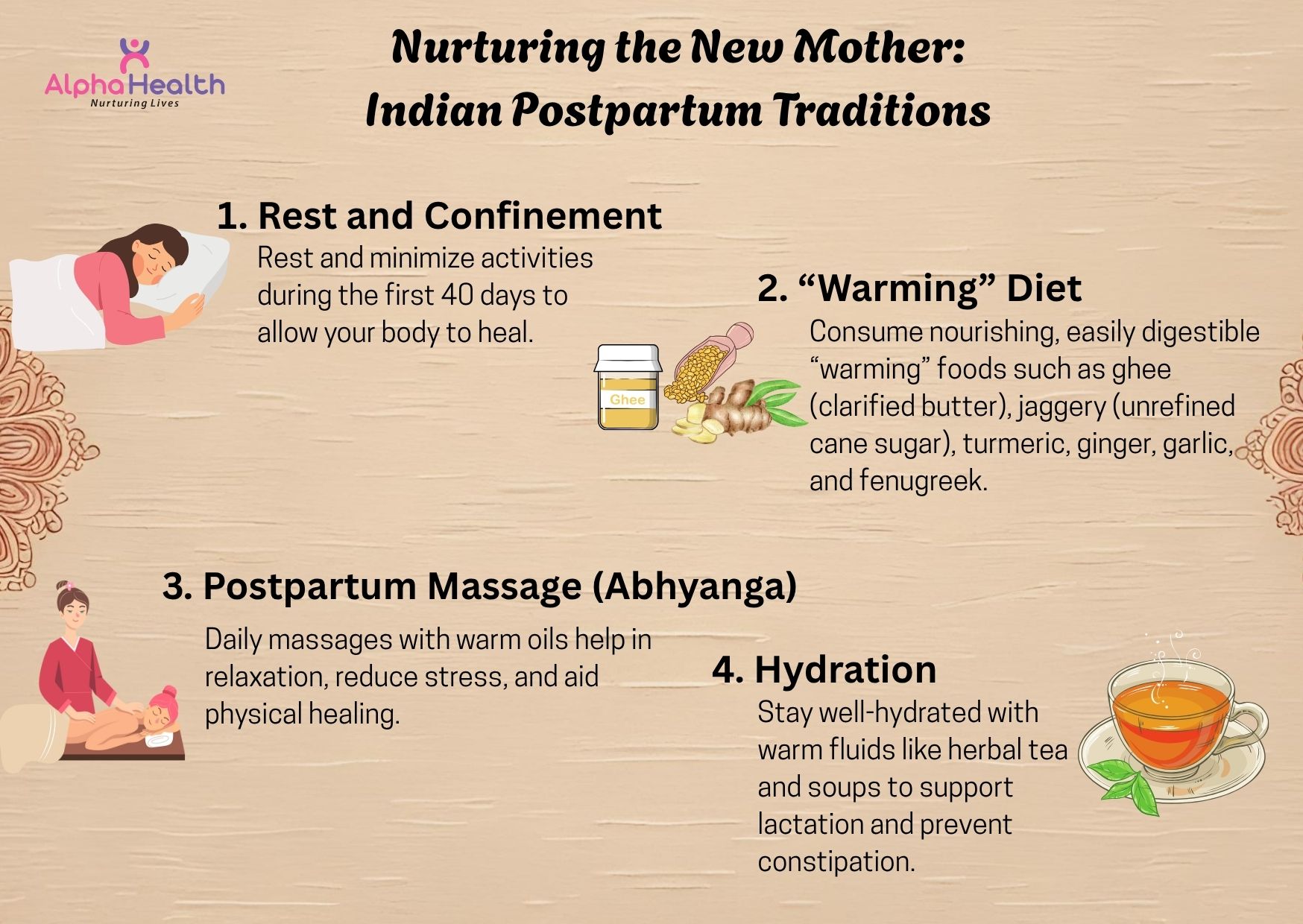
For generations, Indian families have revered the first 40 days after childbirth as a sacrosanct period of recovery and bonding for the new mother. This tradition, often referred to as “jaapa” or “sutika,” is a time of intentional rest, specific dietary regimens, and dedicated care, all aimed at ensuring the mother’s swift and complete recuperation. While some may view these practices as age-old customs, a closer look reveals a profound alignment with modern scientific understanding of the postpartum body and mind.
The 40-day timeframe is not arbitrary. Physiologically, this period, known in medical terms as the puerperium, is when the mother’s body undergoes a remarkable transformation, striving to return to its pre-pregnancy state. The uterus, which expands to many times its normal size, involutes, and the hormonal shifts that sustained pregnancy dramatically reverse. This delicate phase requires careful management to prevent long-term health complications.
The Pillars of Indian Postpartum Care: A Scientific Lens
The traditional Indian approach to postpartum care rests on several key pillars, each with scientifically supported benefits for the new mother.
1. The Sanctity of Rest and Confinement:
A cornerstone of the 40-day tradition is the emphasis on complete rest and confinement for the mother. She is shielded from household chores and external stressors, allowing her body to dedicate its energy to healing.
Scientific Backing: Childbirth, whether vaginal or cesarean, is a significant physical event. The body needs time to repair torn tissues, for the uterus to shrink back to its normal size (a process called involution), and for energy levels to be restored. The World Health Organization (WHO) emphasizes the importance of rest to prevent postpartum fatigue and to facilitate overall recovery. Furthermore, limiting exposure to the outdoors and numerous visitors in the initial weeks can reduce the risk of infections for both the mother, whose immune system is still recovering, and the vulnerable newborn.
2. The “Warming” Diet: Nourishment for Healing and Lactation
Indian postpartum diets are meticulously planned, focusing on “warming” foods that are easy to digest and rich in specific nutrients. Ingredients like ghee (clarified butter), jaggery (unrefined cane sugar), turmeric, ginger, garlic, and fenugreek are staples.
Scientific Backing:
- Ghee and Healthy Fats: Ghee is a source of butyric acid, a short-chain fatty acid that aids digestion and has anti-inflammatory properties. Healthy fats are crucial for hormone production and for absorbing fat-soluble vitamins (A, D, E, and K), which are vital for tissue repair.
- Galactagogues: Fenugreek (methi), fennel (saunf), and garlic are well-known galactagogues, substances that promote lactation. Scientific studies have shown that fenugreek can significantly increase milk production in lactating mothers.
- Anti-inflammatory and Immunity-Boosting Spices: Turmeric, with its active compound curcumin, is a powerful anti-inflammatory agent that can help reduce postpartum inflammation and pain. Ginger and garlic are known for their immune-boosting properties, helping to protect the mother from infections.
- Iron and Energy: Jaggery is a good source of iron, which is essential for replenishing blood loss during delivery and combating postpartum anaemia and fatigue.
3. The Healing Touch of Postpartum Massage (Abhyanga):
Daily massages with warm, herb-infused oils are a common practice. This is not merely a form of pampering but a therapeutic intervention.
Scientific Backing: Postpartum massage has been shown to have numerous benefits. It can help in:
- Reducing Stress Hormones: Massage can lower levels of cortisol, the body’s primary stress hormone, and increase the production of endorphins, the “feel-good” hormones, which can help alleviate the “baby blues” and reduce the risk of postpartum depression.
- Improving Circulation: The gentle strokes of a massage can improve blood flow, which aids in the removal of metabolic waste and the delivery of oxygen and nutrients to healing tissues.
- Muscle Relaxation and Pain Relief: It can help relieve the muscle soreness and joint pain that are common after labour and delivery.
- Uterine Involution: Gentle abdominal massage can help stimulate uterine contractions, aiding in its return to the pre-pregnancy size.18
4. The Importance of Hydration:
Emphasis is placed on consuming warm fluids like herbal teas, soups, and warm water.
Scientific Backing: Adequate hydration is crucial for several reasons. It helps to prevent constipation, a common postpartum issue, and is essential for maintaining a healthy milk supply. Warm fluids are often preferred as they are believed to be easier on the digestive system, which can be sluggish after childbirth.
Bridging Tradition with Modern Medicine
While these traditional practices offer a wealth of wisdom, it’s essential to integrate them with modern medical advice. Regular postpartum checkups with a healthcare provider are crucial to monitor for any complications like infections, postpartum haemorrhage, or mental health issues like postpartum depression.
The 40-day postpartum period in India is more than just a set of rituals; it is a holistic system of care that recognises the profound physical, emotional, and psychological transition a woman undergoes. By understanding the scientific principles that underpin these age-old traditions, we can appreciate their enduring value in nurturing new mothers and ensuring their long-term health and well-being.
Resources:
Diorella M. Lopez-Gonzalez; Anil K. Kopparapu, “Postpartum Care of the New Mother“, In: StatPearls [Internet]. Treasure Island (FL): StatPearls Publishing; 2025 Jan-. Available from: https://www.ncbi.nlm.nih.gov/books/NBK565875/
World Health Organisation, WHO recommendations on maternal and newborn care for a positive postnatal experience: https://www.who.int/publications/i/item/9789240045989
Reena Ravi, Jasmine Joseph, “Effect of fenugreek on breast milk production and weight gain among infants in the first week of life“, Clinical Epidemiology and Global Health, Volume 8, Issue 3, 2020, Pages 656-660, doi: 10.1016/j.cegh.2019.12.021.
Hewlings, Susan J, and Douglas S Kalman. “Curcumin: A Review of Its Effects on Human Health.” Foods (Basel, Switzerland) vol. 6,10 92. 22 Oct. 2017, doi:10.3390/foods6100092
- Hall, H G et al. “The effectiveness of massage for reducing pregnant women’s anxiety and depression: systematic review and meta-analysis.” Midwifery vol. 90 (2020): 102818. doi:10.1016/j.midw.2020.102818
Nutrition During Lactation, Institute of Medicine (US) Committee on Nutritional Status During Pregnancy and Lactation, https://www.ncbi.nlm.nih.gov/books/NBK23559



Deeply informative article.
“I really loved how this article explains the importance of the first 40 days after childbirth in such a simple and meaningful way—it felt comforting and relatable.”